Mobile-First Website Design: The Definitive Guide for Modern SaaS in 2025
This article provides a comprehensive guide to mobile-first website design specifically for SaaS companies in 2025. It covers the fundamental principles, essential features, and strategic benefits of prioritizing mobile users to improve user experience, increase conversions, and enhance SEO performance.
Hello! Dillion Hughes here. When I first started out, I had to learn everything from scratch, figuring out which digital skills were genuinely valuable versus just being trendy. Now, as a Project Manager at Evietek, I get to see firsthand how foundational principles can make or break a digital product. One of the biggest game-changers I've seen is the shift to mobile-first thinking.
Did you know that over 64% of global website traffic now comes from mobile devices? That’s a massive number, and for Software-as-a-Service (SaaS) companies, it’s a statistic you simply can't ignore. In the fast-paced world of SaaS, a mobile-first approach to website design has evolved from a smart trend into an absolute necessity for survival and growth. Long gone are the days when a desktop-focused design with a mobile "version" was enough. Today's users expect a seamless, intuitive, and engaging experience on their smartphones and tablets. This guide will walk you through everything you need to know about crafting a powerful mobile-first website design that not only looks incredible but also drives user engagement and conversions for your SaaS business in 2025 and beyond.
Key Takeaways
Mobile-First is Essential: With over half of web traffic coming from mobile, a mobile-first strategy is no longer optional for SaaS companies.
SEO is Tied to Mobile: Google's mobile-first indexing means your site's mobile version is the primary one for ranking. A poor mobile experience directly hurts your visibility.
Focus on Core Principles: Successful mobile design is built on progressive enhancement, responsive layouts, content prioritization, and touch-friendly navigation.
User Experience Drives Conversions: A fast, intuitive mobile site leads to higher engagement, better user retention, and increased conversion rates.
Future-Proof Your Platform: A mobile-first foundation makes your SaaS website more adaptable to new devices and emerging technologies.
Why a Mobile-First Approach is Non-Negotiable for SaaS in 2025
Let's be direct: if your SaaS website isn't designed for mobile users first, you're already falling behind. The digital landscape has fundamentally shifted, and clinging to a desktop-centric mindset is a surefire way to lose customers and search engine visibility. Here’s why a mobile-first strategy is absolutely critical.
The Mobile Majority
The data doesn't lie. Mobile devices account for the majority of internet traffic worldwide. This means a significant portion of your potential customers are discovering, researching, and even making purchasing decisions about your SaaS product while on the go. By meeting them where they are with an optimized experience, you align your business with modern user behavior.
Google's Mobile-First Indexing
This is a big one. For years now, Google has been using mobile-first indexing. This means Google primarily uses the mobile version of your content for indexing and ranking. If your mobile site is slow, difficult to navigate, or missing content that's on your desktop site, your search engine rankings will suffer. An excellent mobile experience isn't just for users; it's a direct signal to search engines that your site is high-quality and relevant.
Enhanced User Experience (UX)
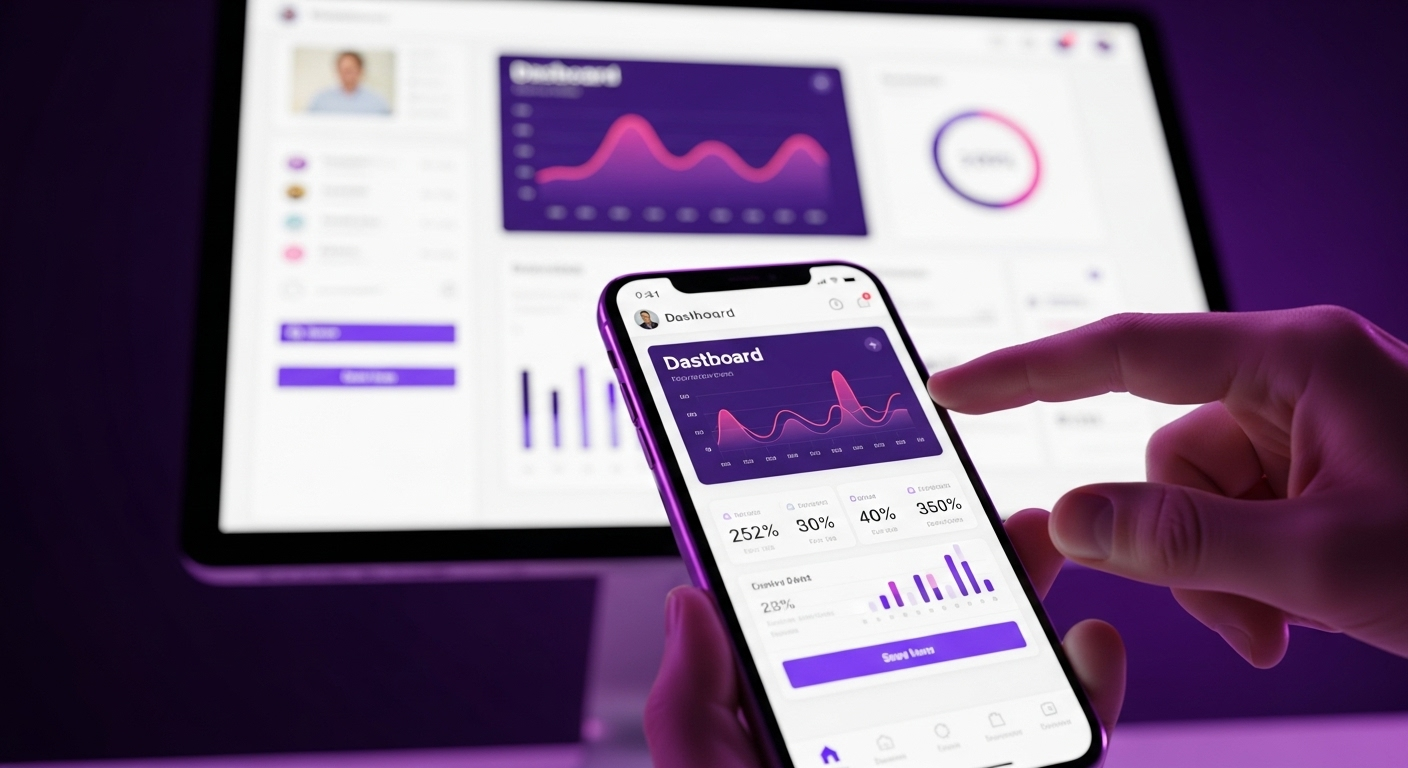
A mobile-first design philosophy forces you to prioritize. With limited screen real estate, you have to focus on the most essential content and features, which often leads to a cleaner, more intuitive user experience for everyone. This streamlined approach eliminates clutter and helps users accomplish their goals faster, whether they're on a phone, tablet, or desktop.
Higher Conversion Rates
A positive and seamless mobile experience is directly linked to better business outcomes. When users can easily find information, sign up for a trial, or contact support on their mobile device, they are far more likely to convert into paying customers. A frustrating mobile journey, on the other hand, leads to high bounce rates and lost revenue.
Core Principles of Mobile-First SaaS Website Design
Adopting a mobile-first mindset requires a strategic approach grounded in a few core principles. This isn't just about shrinking your desktop site; it's about rethinking your design from the ground up.
Progressive Enhancement
This is the foundational principle of mobile-first design. You start by building a baseline experience for mobile devices that includes all the core functionalities. From there, you progressively add more complex features and enhancements for larger screens like tablets and desktops. This ensures that every user has a solid, functional experience, regardless of their device.
Responsive Design is Key
Your website must be able to adapt its layout and content dynamically to fit any screen size. This is achieved through responsive design, which uses flexible grids, adaptable layouts, and CSS media queries. A truly responsive site provides an optimal viewing and interaction experience across a wide range of devices, from the smallest smartphone to the largest desktop monitor.
Content Prioritization
The limited space on mobile screens demands ruthless prioritization of your content. You need to identify the most critical information and calls-to-action and ensure they are front and center. Ask yourself: what does a user absolutely need to see to understand our value proposition and take the next step? This focus benefits all users by making your messaging clearer and more direct.
Touch-Friendly Navigation
Design with fingers in mind, not mouse cursors. This means making buttons and links large enough to be easily tapped and ensuring there is enough space between interactive elements to prevent frustrating mis-clicks. Simple, intuitive navigation patterns like a hamburger menu or a streamlined bottom navigation bar work best for mobile users.
Key Features Every Mobile-Optimized SaaS Site Needs
Beyond the core principles, a high-performing mobile SaaS website must include several key features designed to create a smooth and efficient user journey.
Streamlined Navigation
Mobile users need to find what they're looking for quickly. Implement simple and intuitive navigation, such as a well-organized hamburger menu or a sticky navigation bar with essential links. Avoid overwhelming users with too many options. The goal is clarity and ease of use.
Optimized Forms
Long, complicated forms are a major conversion killer on mobile. Keep your forms as short and simple as possible, asking only for essential information. Use mobile-friendly input types (like a number pad for phone numbers) and consider breaking longer processes into multiple, easy-to-digest steps to reduce user friction.
Fast Loading Speeds
Mobile users are not patient. A delay of just a few seconds in page load time can cause them to abandon your site. Optimize your images, leverage browser caching, and minimize your code to ensure your site loads almost instantly, even on slower mobile connections. You can use tools like Google PageSpeed Insights to test and improve your performance.
Clear and Compelling Calls-to-Action (CTAs)
Your CTAs should be impossible to miss. They need to be prominent, concise, and easy to tap. Use action-oriented language that clearly communicates the benefit of clicking, such as "Start Your Free Trial" or "See Pricing." Make them stand out with contrasting colors and place them in logical, easy-to-reach spots on the screen.
The Competitive Edge of a Flawless Mobile Experience
In a crowded SaaS market, user experience can be the deciding factor that sets you apart from the competition. A superior mobile experience is a powerful differentiator.
Building Trust and Credibility
A professional, polished, and easy-to-use mobile website signals to potential customers that you are a modern, credible company that values their experience. A clunky or broken mobile site, in contrast, can create a negative first impression and erode trust before you even have a chance to demonstrate your product's value.
Increased User Engagement and Retention
A positive mobile experience encourages users to spend more time on your site, explore your features, and return in the future. For SaaS businesses that rely on a subscription model, user retention is everything. A great mobile site contributes to a positive overall customer experience, which is key to keeping users engaged and subscribed long-term.
Gaining a Competitive Advantage
When a potential customer is comparing your SaaS product with a competitor's on their phone, the one with the better mobile experience often wins. By investing in a flawless mobile design, you are directly investing in a stronger competitive position and capturing a larger share of the on-the-go market.
Future-Proofing Your SaaS with Mobile-First Design
A mobile-first approach isn't just about meeting the demands of today; it's about building a flexible foundation for the future.
Adapting to New Devices
The world of technology is constantly evolving. A mobile-first strategy built on the principles of responsive design ensures that your website is inherently adaptable to new devices and screen sizes as they emerge. Whether it's a foldable phone or a new type of tablet, your site will be ready.
Integration of Emerging Technologies
A solid mobile foundation makes it easier to integrate future technologies. Whether you're considering AI-powered personalization, augmented reality features, or Progressive Web Apps (PWAs), a well-structured, mobile-first website provides the flexible architecture you need to innovate.
Scalability and Flexibility
A website designed with a mobile-first approach is typically more scalable and easier to maintain. The focus on clean code and prioritized content means your online presence can grow alongside your business without requiring a complete overhaul every few years.
Conclusion
In the dynamic and highly competitive SaaS landscape of 2025, a mobile-first website design is no longer just a best practice; it is the fundamental cornerstone of a successful digital strategy. By prioritizing the mobile experience, you are not only catering to the majority of your audience but also future-proofing your business for the technological innovations yet to come. A seamless, intuitive, and fast-loading mobile site will not only improve your SEO rankings but will also dramatically boost user engagement and drive conversions. It's time to stop viewing mobile as an afterthought and start embracing it as the primary touchpoint for your customers. Ready to revolutionize your SaaS website? It all starts with building a mobile experience that truly captivates and converts.
Frequently Asked Questions (FAQ)
Web mobile design is the practice of creating websites that are optimized for viewing and interaction on mobile devices like smartphones and tablets. It involves adapting the layout, content, and functionality to smaller screen sizes and touch-based interfaces to provide a seamless user experience.
To create a mobile website, you should adopt a mobile-first design approach. This involves starting with the design for the smallest screen and progressively enhancing it for larger devices. Key steps include using a responsive framework, prioritizing essential content, designing touch-friendly navigation, and optimizing for fast loading speeds.
The main differences between desktop and mobile web design stem from screen size, user interaction, and content organization. Desktop designs have more space for complex layouts and mouse-based navigation, while mobile designs must prioritize simplicity, use touch-friendly elements, and present content in a single-column format for easy scrolling.
The cost to build a mobile website can vary widely, typically ranging from $3,000 to $30,000. The final price depends on factors like design complexity, the number of custom features, and whether you work with a freelancer or an agency. Simpler, template-based sites can cost less, while highly customized platforms will be at the higher end of the range.
To convert an existing website to be mobile responsive, you can use CSS media queries to apply different styles based on screen size. This allows you to adjust layouts, font sizes, and image dimensions for mobile devices. For more complex sites, this may involve rebuilding the front-end using a responsive framework like Bootstrap and adopting a mobile-first approach to ensure the user experience is optimized.