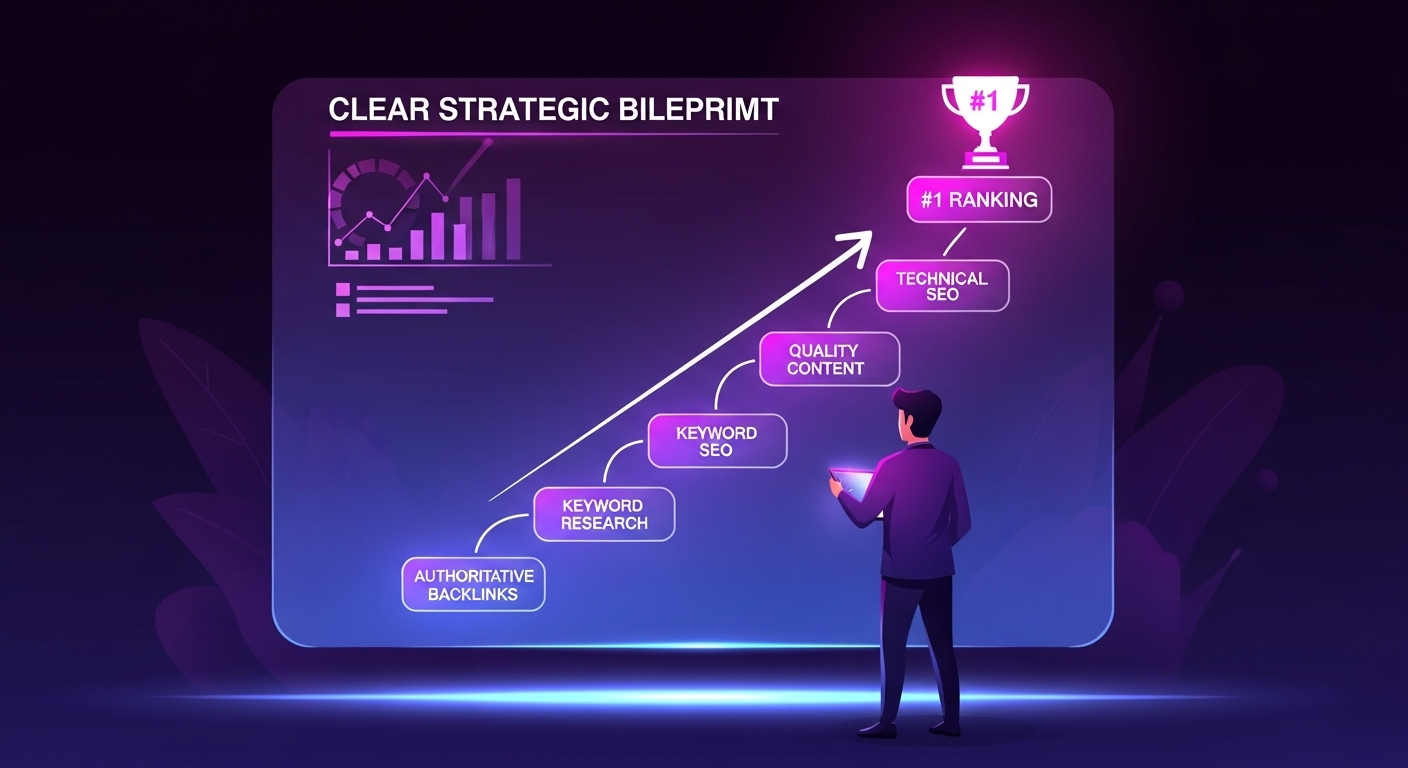
SEO for Startups: Skyrocket Your Rankings in 2025!
Hello there! Jayden Quintero here, your friendly AI and ML developer, ready to share some practical insights on a topic that’s absolutely critical for any burgeoning business: SEO for Startups. As someone who spends their days wrestling with algorithms and optimizing systems, I can tell you that the principles of efficiency and intelligent design apply just as much to your online presence as they do to a finely tuned machine learning model. Let's get your startup seen!
Did you know that 93% of online experiences begin with a search engine? For ambitious startups, neglecting SEO is not just a missed opportunity—it is practically signing away your future customer base! Many new businesses launch with incredible products or services, but without a solid SEO for startups foundation, they struggle to gain traction. "How can we stand out?" you might wonder. Or "Where do we even begin with search engine optimization when resources are tight?" I have been there, and I get it. Building an impactful online presence from the ground up can feel daunting, but trust me, it is absolutely achievable. In this comprehensive guide, we are going to dive deep into actionable SEO strategies specifically designed to help your startup not just survive, but truly thrive and dominate search rankings in 2025. Get ready to unlock the power of organic growth!
Key Takeaways: Your SEO Cheat Sheet
SEO is Your Most Cost-Effective Marketing Tool: Unlike paid ads, SEO builds a long-term asset. Ranking for your keywords drives continuous, "free" traffic from customers actively looking for your solution.
Content is Your Foundation: You can't rank without high-quality, helpful content. Focus on creating blog posts and pages that answer your ideal customer's most pressing questions better than anyone else.
Technical Health is Non-Negotiable: Your site must be fast, secure (HTTPS), and mobile-friendly. Google prioritizes websites that offer a great user experience, and these technical basics are the starting point.
Links from Other Sites = Trust: Think of backlinks as votes of confidence. The more high-quality, relevant websites that link to you, the more Google trusts your startup and the higher you will rank.
Start Local (If Applicable): If you serve a specific geographic area, optimizing your Google My Business profile is the fastest way to get on the map and attract local customers.
You Can't Improve What You Don't Measure: Set up Google Analytics and Google Search Console from day one. These free tools tell you which keywords drive traffic and how visitors interact with your site, showing you exactly what to focus on.
Consistency Over Intensity: SEO is a marathon, not a sprint. Small, consistent efforts in content creation and link building over time will always beat short, intense bursts of activity.
The Untapped Potential: Why SEO is Crucial for Startups
As a developer, I have seen firsthand how powerful intelligently designed systems can be. Think of search engines as the ultimate discovery mechanism; they are the gatekeepers to your potential customers. For a startup, this is a game-changer.
What is SEO in startups? SEO in startups involves optimizing a new business's website and online content to rank higher in search engine results, driving organic traffic and brand awareness from day one. It helps emerging businesses compete with established players by securing visibility without relying solely on expensive paid advertising.
Understanding Startup Challenges
Startups face unique hurdles. You likely operate with a limited budget, making every dollar count. Building brand awareness from scratch is a monumental task, and you are competing with established players who have years of accumulated authority. This is where SEO shines, offering a long-term, sustainable solution.
The Power of Organic Traffic
Organic traffic, meaning visitors who find your site through unpaid search results, is incredibly valuable. It is generally more cost-effective than paid advertising over time, providing a consistent stream of qualified leads. This is your seo for business growth engine. Once you rank, that traffic keeps flowing without a per-click cost.
Building Credibility and Trust
Consider this: people instinctively trust search engines. If Google ranks your site highly, it automatically confers a level of credibility. High search rankings influence user perception, signaling that your startup is a reliable and authoritative source in its niche. This builds your seo moat, making it harder for competitors to displace you.
Early Adoption Advantage
Starting SEO early gives you a significant advantage. The sooner you begin, the quicker you can establish domain authority and start ranking for critical keywords. This positions your startup as a leader, allowing you to capture market share before competitors even realize what is happening.
Laying the Groundwork: Essential On-Page SEO for Startups
On-page SEO is about optimizing the actual content and HTML source code of a page. Think of it as meticulously crafting the internal workings of a program for maximum efficiency.
Keyword Research for New Businesses
This is your starting point. You need to identify low-competition, high-intent keywords that your target audience is actually searching for. Tools can help, but understanding user intent is paramount. Are they looking for "best project management software for small teams" or "free CRM for startups"?
Optimizing Your Website Structure
A well-structured website is like a well-organized database. It is easier for users to navigate and easier for search engines to crawl and understand. Ensure clear navigation, logical hierarchies, and a flat site structure where important pages are only a few clicks from the homepage. This directly impacts user experience (UX) and crawlability for search engines.
Crafting Compelling Content
Content is king, as they say, and for good reason. Your blog posts, service pages, and product descriptions must be informative, engaging, and genuinely helpful. They should naturally incorporate your target keywords and related terms. This is where your expertise truly shines, solving problems for your audience.
Meta Titles and Descriptions that Convert
These are your advertisements in the search results. Your meta title (the clickable headline) and meta description (the short summary) need to be compelling, include your primary keyword, and entice users to click. Think of them as the call to action for the search engine results page.
Image Optimization Best Practices
Images can either enhance or hinder your site. Optimize image file sizes to prevent slow loading times. Always use descriptive alt text, which is crucial for accessibility and provides context to search engines about your images.
Technical SEO Fundamentals: Ensuring Your Startup Website is Search-Engine Ready
Technical SEO ensures that search engines can effectively crawl, index, and render your website. It is the underlying architecture, similar to how I would optimize a backend system for performance.
Website Speed and Performance
In the digital world, speed is paramount. A slow website frustrates users and impacts your search rankings. Optimize loading times by compressing images, minifying code, and leveraging browser caching. Every millisecond counts.
Mobile-First Indexing
Google now primarily uses the mobile version of your content for indexing and ranking. Your site must be responsive and optimized for mobile devices. Test it thoroughly across various screen sizes to ensure a seamless experience.
SSL Certificates (HTTPS)
Security is not just good practice; it is a ranking factor. An SSL certificate (HTTPS) encrypts data between your site and your users, making your website secure. This builds trust and is favored by search engines.
XML Sitemaps and Robots.txt
These files guide search engines. An XML sitemap lists all important pages on your site, helping crawlers find them. Robots.txt tells search bots which pages they can and cannot access. Proper configuration is vital for effective crawling.
Schema Markup Basics
Schema markup is structured data that you add to your HTML to help search engines better understand your content. It can enhance your search listings with rich snippets, like star ratings or product prices, making your result stand out.
Building Authority: Link Building Strategies for Emerging Businesses
Link building, often called off-page SEO, is about acquiring backlinks from other credible websites. Think of it as gaining endorsements from respected peers in your industry.
- What are the 4 pillars of SEO? The four pillars of SEO are typically considered to be:
- Technical SEO: Ensuring search engines can crawl, index, and render your site.
- On-Page SEO: Optimizing individual pages for target keywords and user experience.
- Content Marketing: Creating valuable, relevant content to attract and engage your audience.
- Off-Page SEO (Link Building): Acquiring high-quality backlinks from other websites to build authority.
- What are the 4 C's of SEO? While not universally recognized as a standard framework like the 4 pillars, a useful "4 C's" for SEO could be:
- Crawlability: Can search engines access and read your site?
- Content: Is your content high quality, relevant, and engaging?
- Credibility: Do other authoritative sites link to yours?
- Conversions: Does your SEO efforts lead to desired user actions?
Understanding Backlinks
A backlink is when another website links to yours. Search engines view these as votes of confidence. High-quality, relevant backlinks from authoritative sites are a powerful signal of your own site's credibility and authority.
Guest Blogging Opportunities
Guest blogging involves writing an article for another website in your industry. In return, you usually get a backlink to your site within the article or author bio. This is an excellent way to gain exposure and build valuable links.
Digital PR for Startups
Digital PR focuses on earning mentions and backlinks from media outlets, journalists, and influential bloggers. This can involve creating compelling data, unique stories, or valuable resources that attract attention.
Broken Link Building
This strategy involves finding broken links on other websites, creating content that serves as a replacement for the missing resource, and then suggesting your content to the site owner as an alternative. It is a proactive way to earn links.
Leveraging Local SEO
If your startup serves a specific geographic area, local SEO is non-negotiable. Optimize your Google My Business profile, ensure consistent NAP (Name, Address, Phone Number) information across online directories, and aim for local citations. This is critical for connecting with local customers.
Tracking Success: Analytics and Iteration for Startup SEO
Just like any well-engineered system, you need data to measure performance and iterate. Without tracking, your SEO efforts are just guesswork.
Setting Up Google Analytics 4
Google Analytics 4 (GA4) provides powerful insights into how users interact with your website. Monitor key metrics such as traffic sources, bounce rate, time on page, and conversion rates. This data informs your decisions.
Google Search Console Insights
Google Search Console (GSC) is an invaluable free tool directly from Google. It shows you how your site performs in search, identifying crawl errors, listing your top-performing keywords, and highlighting opportunities for improvement. Pay close attention to your keyword performance.
Monitoring Keyword Rankings
Regularly track your keyword rankings for your target terms. Tools exist to automate this, providing a clear picture of your progress and helping you identify areas where you are gaining or losing ground.
Competitor Analysis
What are your competitors doing right? And where are they falling short? Analyzing their SEO strategies, keywords, and backlinks can provide valuable insights and reveal gaps you can exploit to your advantage. This helps you build a stronger seo moat.
The Importance of Ongoing Optimization
SEO is not a one-time task; it is a continuous process. Search engine algorithms evolve, user behavior changes, and competitors emerge. Regularly audit your site, update content, and refine your strategies. SEO is a marathon, not a sprint.
FAQ
Frequently Asked Questions
Yes, SEO is absolutely worth it for a small business. It offers a cost-effective, sustainable way to attract qualified leads, build brand authority, and compete with larger enterprises by securing organic online visibility.
Four types of SEO commonly discussed are: On-Page SEO: Optimizing content and HTML on individual pages. Technical SEO: Ensuring site architecture and performance are search engine friendly. Off-Page SEO: Building domain authority through backlinks. Local SEO: Optimizing for location-specific search queries.
Conclusion: Your Path to Sustainable Online Growth
We have covered a lot of ground today, haven't we? From understanding the absolute necessity of SEO for startups to diving into practical on-page, technical, and off-page strategies, you now have a robust framework to propel your business forward. Remember, in the competitive world of startups, visibility is vitality. Do not let your brilliant ideas get lost in the digital noise!
By consistently applying these SEO principles, monitoring your results, and adapting your approach, you are not just building a website; you are building a sustainable, growth-oriented machine. As an AI developer, I appreciate elegant solutions, and effective SEO is precisely that—an elegant solution for achieving lasting online success. So, what are you waiting for? Start implementing these strategies today and watch your startup climb the search engine ladder, attracting the right audience and achieving the success it deserves!